
Google Search Console for Social Media: Why This Changes Organic Social
Google Just Changed Social Media Measurement Forever (And Marketers Should Be Paying Attention)
For years, one of the biggest challenges facing social media marketers has been proving value beyond the platforms themselves.
We could report on impressions, engagement, reach, video views and follower growth, but demonstrating exactly how organic social contributed to discovery was often far more difficult. Once somebody left Instagram or TikTok and started searching on Google, that journey became much harder to connect.
Google has just taken a significant step towards solving that problem.
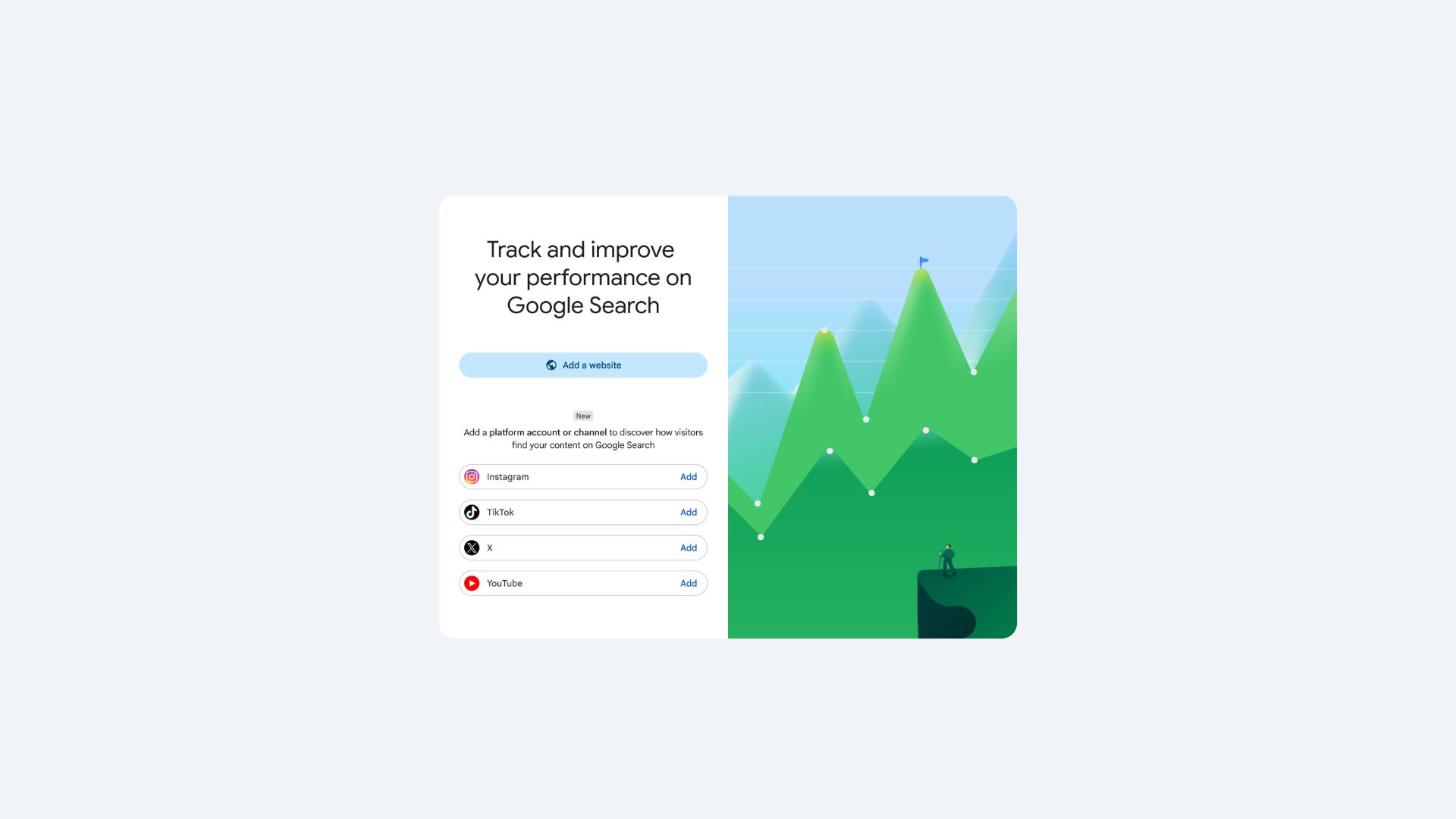
Search Console now supports platform properties, allowing creators, publishers and brands to monitor how their Instagram, TikTok, YouTube and X content performs in Google Search and Discover.
On the surface, it looks like another reporting update.
In reality, it's a signal that social media is becoming a much more measurable acquisition channel.
What Has Google Actually Announced?
Google has introduced a new property type inside Search Console called Platform Properties.
Instead of only measuring your website's search performance, you'll now be able to connect supported social accounts directly to Search Console.
Initially this includes:
- TikTok
- YouTube
- X
Once connected, marketers can see how their content performs in Google Search and Discover without needing to own a website.
That's particularly significant because creators and brands have increasingly built audiences entirely on social platforms, often with little or no owned web presence.
Google is effectively recognising social profiles as searchable destinations in their own right.
What Can You See?
The new reports look very similar to traditional Search Console reporting.
You'll now be able to understand:
- Which Google searches lead people to your social content
- Which posts generate the most clicks from Search
- Total impressions
- Click-through performance
- Discovery trends over time
- Your top-performing posts
- How audiences are finding your content through Google
Perhaps most importantly, all of this can be exported alongside your existing reporting.
For the first time, brands can begin looking at organic social search visibility in exactly the same way they've analysed website SEO for years.
Why This Matters More Than It First Appears
This isn't simply a reporting improvement.
It's another indication that the lines between search and social are disappearing.
Consumers don't think in channels.
They simply search for answers.
Sometimes those answers come from websites.
Increasingly, they come from TikTok videos, Instagram posts, YouTube Shorts and creator content.
Google knows this.
That's why we're seeing social content surface more frequently inside search results, while platforms like TikTok have become search engines in their own right for younger audiences.
Search behaviour has evolved.
Reporting is finally catching up.
Social Is Becoming an Acquisition Channel
For years, marketers have tended to separate SEO from social media.
SEO generated discovery.
Social generated engagement.
That distinction no longer feels accurate.
Organic social increasingly drives:
- Brand discovery
- Product research
- Purchase consideration
- Search demand
- Website traffic
Now marketers can measure part of that journey inside Search Console itself.
Rather than asking whether social "drives SEO", we should probably be asking how social contributes to overall search visibility.
Those are very different conversations.
Organic Social Just Became Easier to Report
One of the biggest frustrations for marketing teams has always been reporting.
Senior stakeholders rarely care about likes. They care about business outcomes.
Being able to demonstrate that social content is appearing in Google Search gives marketers another valuable layer of evidence when demonstrating the impact of organic social activity.
Instead of reporting only:
- Reach
- Engagement
- Followers
- Saves
You'll also be able to show:
- Search visibility
- Search-driven clicks
- Search demand
- Discovery through Google
That creates a much more complete picture of performance.
This Changes Content Strategy Too
Measurement influences behaviour. If marketers can now see which Instagram Reels or TikTok videos appear most frequently in Google Search, they'll naturally begin optimising content differently.
We'll likely see greater emphasis on:
- Clear video titles
- Search-friendly captions
- Educational content
- Evergreen topics
- Frequently asked questions
- Problem-solving content
In other words, content that's already performing well across search-led social platforms.
The overlap between SEO and social strategy will continue to grow.
Why This Is Good News for B2B Brands
Consumer brands have embraced search-first social for some time. B2B has been slower.
This update makes it easier for B2B organisations to demonstrate that thought leadership, educational videos and industry insights aren't just driving engagement inside LinkedIn or Instagram.
They're contributing to wider discoverability too. That's a much easier conversation to have with senior leadership.
What Should Marketers Do Now?
If you're using Instagram, TikTok, YouTube or X as part of your content strategy, this feature is worth enabling as soon as it's available.
Once connected, we'd recommend:
- Tracking which topics generate Search visibility.
- Comparing search performance against platform engagement.
- Identifying evergreen content that continues driving discovery.
- Looking for opportunities to repurpose high-performing posts.
- Using search queries to inform future content planning.
The more these datasets begin working together, the clearer your content strategy becomes.
Pepper's View
At Pepper, we've always believed organic social should be measured by more than engagement.
Great content doesn't just entertain existing followers, it helps new audiences discover your brand.
Google's latest Search Console update feels like another step towards recognising something marketers have known for a while: social media isn't simply a brand awareness channel anymore.
It's becoming one of the most important discovery channels available.
As search behaviour continues shifting towards creators, videos and platform-native content, the brands that succeed won't separate SEO from social media. They'll build content strategies where both disciplines work together.
Because ultimately, your audience doesn't care whether they discovered you through Google or Instagram.
They care that they found the right answer.
Frequently Asked Questions
What is Google Search Console's new Platform Properties feature?
Platform Properties is a new Search Console property type that lets creators and brands measure how their Instagram, TikTok, YouTube and X content performs in Google Search and Discover.
Which social platforms are supported?
At launch, Platform Properties support Instagram, TikTok, YouTube and X, with Google expected to expand support over time.
Do I need a website to use Platform Properties?
No. One of the biggest changes is that creators and publishers without their own websites can still access Search Console reporting for supported social accounts.
What metrics can I see?
You'll be able to view impressions, clicks, top-performing posts, search queries, traffic trends and how users discover your social content through Google Search and Discover.
Why is this important for marketers?
It makes organic social easier to measure as an acquisition channel by connecting social content with search performance, giving marketers a clearer picture of how audiences discover their brand.
How will this change social media strategy?
Brands are likely to place greater emphasis on searchable, educational and evergreen content that performs well across both social platforms and Google Search, bringing SEO and organic social closer together than ever before.
Explore Our Latest Insights
Stay updated with our latest articles and resources.










Ready to elevate your marketing strategy?
Let’s add some spice to your next campaign 🌶️