
What Are Instants, and Should Brands Actually Care?
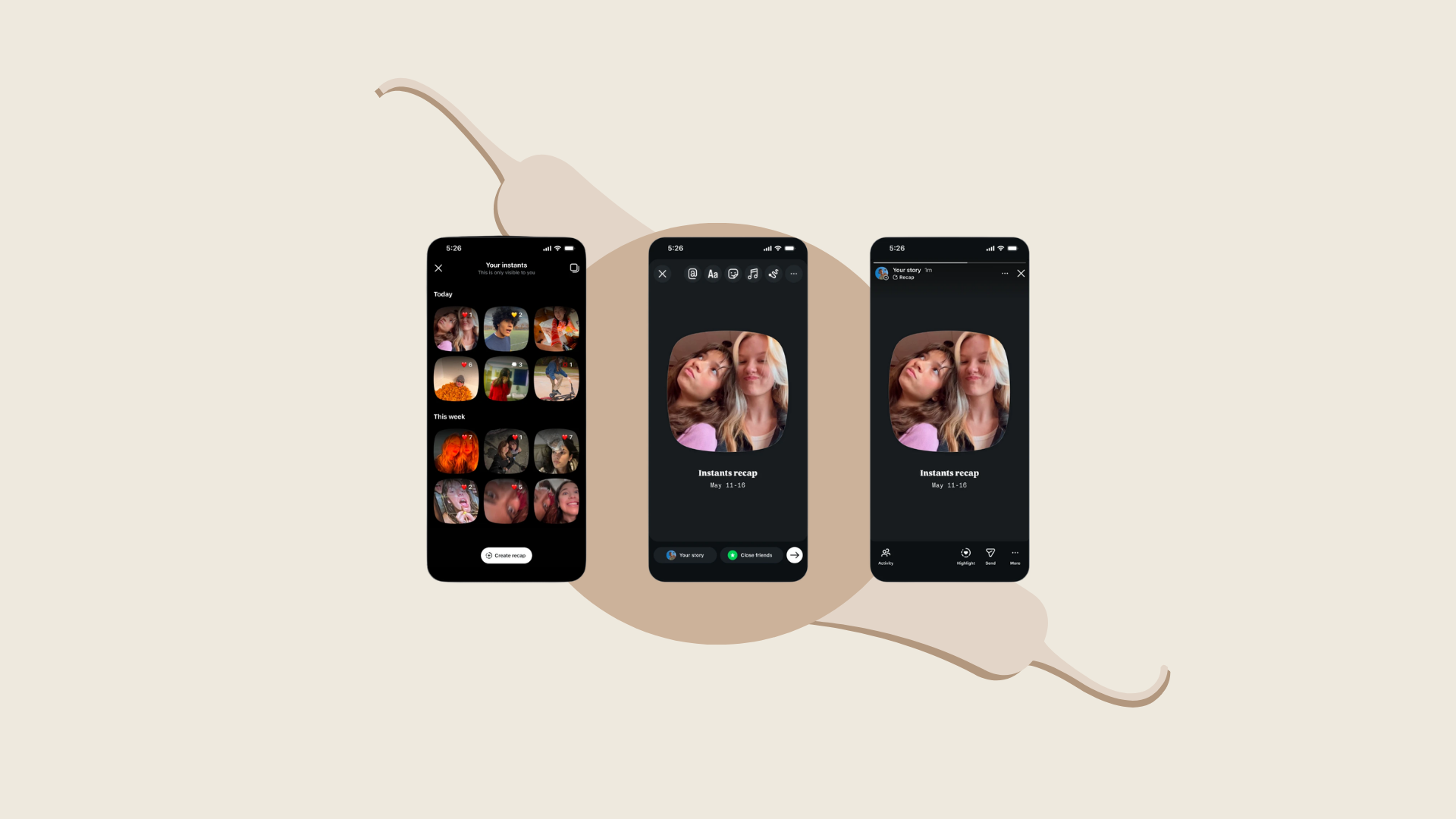
Meta is trying again to crack disappearing social.
This time, it is through a new standalone app called Instants, a Snapchat-style platform built around temporary photo sharing, quick interaction and unedited content. The app reportedly opens directly to the camera, allows users to send disappearing photos to friends and leans heavily into the idea of “real life, real quick.”
If that sounds familiar, it is because we have seen versions of this idea before. Shots. Slingshot. Poke. BeReal-inspired features. Instagram Stories. Meta has spent well over a decade trying to capture the kind of spontaneous, private sharing behaviour that Snapchat built its identity around. Some attempts stuck, but most disappeared almost as quickly as the content itself.
So the obvious question for brands is whether Instants is something they should actually care about, or whether this is simply another Meta experiment that quietly fades away after a few months of hype.
Honestly, the answer is probably somewhere in the middle.
Because while Instants itself may or may not survive long term, the behaviour behind it absolutely matters, and that is the part brands should really be paying attention to.
Table of Contents
- What Is Instants?
- Why Is Meta Launching It Now?
- Why Private Social Behaviour Matters More Than Public Posting
- The Bigger Shift Happening Across Social Media
- How Brands Could Use This Behaviour Creatively
- Will Instants Actually Last?
- What This Means for Brands
- Why “Unpolished” Content Keeps Winning
- Instants FAQs
- Final Thoughts
What Is Instants?
Instants is Meta’s new standalone photo-sharing app designed around disappearing images and private interaction.
The app reportedly opens directly into the camera, similar to Snapchat, and encourages users to share quick, temporary photos with friends rather than polished public posts. Meta’s positioning around the app focuses heavily on spontaneity, authenticity and low-pressure sharing, with messaging centred around “real life” rather than curated identity.
In practical terms, it feels like a combination of Snapchat, BeReal, Instagram DMs and older Instagram Stories behaviour all rolled into one.
The concept itself is not especially new, which is partly why the launch feels interesting. Meta clearly believes this type of behaviour is becoming increasingly important, otherwise it would not keep revisiting the same territory over and over again.
And honestly, the wider social landscape suggests they are probably right.
Why Is Meta Launching It Now?
On the surface, this looks like another attempt to challenge Snapchat directly, which would not be surprising given Meta and Snapchat’s long-running rivalry.
But the timing probably says more about user behaviour than competition alone.
Public posting behaviour has slowed down significantly over the past few years, particularly among younger audiences. People still spend huge amounts of time on social platforms, but increasingly that interaction happens through DMs, group chats, temporary stories, close friends lists and smaller private spaces rather than permanent public feeds.
The polished “main feed” era is starting to lose some of its importance.
Younger users especially are becoming more selective about what they post publicly because public posting now comes with more pressure, permanence and self-awareness than it used to. People still want to share constantly, but they increasingly want to do it in ways that feel temporary, casual and socially safer.
That is really the behaviour Meta is chasing here.
Instants is less about reinventing social media and more about adapting to how audiences are already communicating.
Why Private Social Behaviour Matters More Than Public Posting
One of the biggest shifts happening across social media right now is that social interaction is becoming more private, even while content consumption remains highly public.
People might spend hours scrolling TikTok or Instagram feeds, but when they actually interact with friends, share opinions or react emotionally to content, that behaviour increasingly happens inside private spaces.
That changes how influence works online.
For years, brands focused heavily on public-facing content because that was where visibility lived. But increasingly, the most meaningful engagement is happening in smaller, more intimate environments where people feel less pressure to perform and more comfortable sharing things naturally.
At Pepper, we think this is one of the most important behavioural shifts brands need to understand right now because it changes not only how audiences interact, but also what kind of content they actually trust and share.
Social media is becoming less about broadcasting identity and more about sharing moments, reactions and conversations.
That distinction matters.
The Bigger Shift Happening Across Social Media
Instants also reflects a much wider movement towards less polished content across almost every major platform.
The strongest-performing content right now often feels more casual, conversational and creator-led rather than heavily produced or overly refined. Audiences have become increasingly drawn to content that feels emotionally recognisable and socially natural because they are exhausted by feeds full of overly perfected branding and unrealistic presentation.
We see this constantly across creator campaigns at Pepper.
The content that performs best is rarely the most polished piece of creative in the campaign. More often, it is the content that feels closest to genuine behaviour, whether that is a creator casually documenting a travel experience, sharing a spontaneous reaction or integrating a product naturally into their everyday routine.
That shift matters because platforms are increasingly rewarding behaviour that feels real, immediate and socially native rather than traditionally “advertising-led.”
Instants is clearly designed around exactly that type of interaction.
How Brands Could Use This Behaviour Creatively
Even if Instants itself never becomes a major standalone platform, the style of behaviour it encourages opens up some genuinely interesting creative opportunities for brands.
Disappearing content naturally creates urgency because audiences know the moment is temporary. That changes how people pay attention. Instead of passively scrolling, audiences become more reactive because they do not want to miss the interaction while it exists.
That creates opportunities for brands to build anticipation in a much more playful and culturally native way.
You could easily imagine brands using this type of behaviour for early product snippets, creator-led countdowns, hidden easter eggs inside temporary content, influencer takeovers, behind-the-scenes campaign moments or limited-time reveals designed to reward audiences who are paying close attention.
For launches especially, this could become really interesting.
Instead of one large polished announcement post, brands could build layered excitement over time through small fragments of disappearing content spread across creators, private sharing spaces and community interaction. The experience becomes less about broadcasting information and more about creating a sense of discovery.
At Pepper, we think this style of interaction works particularly well when creators are involved because audiences already engage with creators as people they follow closely rather than traditional advertisers. Temporary content naturally amplifies that feeling of exclusivity and immediacy.
It also aligns with how younger audiences increasingly communicate online. They are moving away from carefully curated identity-building and more towards fast, reactive and emotionally immediate social behaviour.
That probably says more about the future of social than the app itself does.
Will Instants Actually Last?
This is probably the biggest question.
If we are being realistic, Meta’s history with standalone social apps does not exactly suggest long-term success. The company has launched multiple Snapchat-inspired products over the years, and most disappeared fairly quickly once engagement slowed down.
There is also the fact that Instagram itself already contains Stories, Notes, DMs, Close Friends and increasingly private sharing behaviour built directly into the platform. Convincing users to adopt a completely separate app for something they can already partially do elsewhere may prove difficult.
In some ways, Instants risks becoming another one of those heavily discussed Instagram experiments that dominates social media conversations briefly before quietly disappearing into the background a few months later.
But even if the app itself fades away, the behavioural direction behind it almost certainly will not.
That is the important distinction.
Private sharing, temporary interaction and lower-pressure content are clearly becoming more central to how younger audiences use social media. Meta would not keep revisiting this behaviour if the data was not pointing strongly in that direction.
So while Instants itself may not become the next major platform, the style of interaction it represents is probably here to stay.
What This Means for Brands
For most brands, Instants itself probably does not require immediate platform-specific strategy.
At least not yet.
But the behavioural trends behind it absolutely deserve attention because they reinforce a much bigger truth about where social media is heading. Audiences increasingly want content that feels human, reactive and emotionally natural rather than heavily branded or overly polished.
At Pepper, our approach to social and creator strategy is built around real audience behaviour rather than platform hype alone. We focus heavily on understanding how people actually consume, share and trust content across different environments because behaviour almost always matters more than format.
That means thinking beyond vanity metrics and asking bigger questions like:
- Does this content feel socially native?
- Would someone realistically share this privately?
- Does this feel emotionally believable?
- Is this built around attention or connection?
- Would this naturally fit inside creator conversations?
Because increasingly, social performance is being shaped by intimacy and trust rather than visibility alone.
Why “Unpolished” Content Keeps Winning
One of the reasons brands often struggle on newer social formats is because they continue approaching platforms with a campaign-first mindset rather than a behaviour-first one.
But platforms like TikTok, Snapchat and increasingly Instagram reward content that mirrors how real people actually communicate.
That usually means faster storytelling, less production polish, more creator-led formats and content that feels emotionally immediate rather than commercially engineered.
We have seen repeatedly that audiences engage more deeply with content that feels socially natural rather than perfectly branded.
The irony is that as platforms become more sophisticated technically, audiences increasingly crave content that feels less produced.
Instants is really just another signal pointing towards that wider shift.
Instants FAQs
What is Instants?
Instants is Meta’s new standalone app focused on disappearing photo sharing and private interaction, similar to Snapchat.
Is Instants replacing Instagram?
No. Instants appears to function as a companion app connected to Instagram rather than a replacement.
Why is Meta launching Instants?
Meta is responding to growing demand for private, casual and temporary social sharing, particularly among younger audiences.
Should brands start using Instants?
Probably not yet. The platform is still very new, but the behavioural trends behind it are important for brands to watch.
What does Instants tell us about social media trends?
It reinforces the shift towards private sharing, creator-led content, lower-pressure interaction and more authentic social behaviour online.
Final Thoughts
Instants may or may not succeed as an app.
Meta’s history with standalone social products suggests some caution is reasonable. But the bigger behavioural trend behind it is very real.
Social media is becoming less performative, less polished and increasingly centred around smaller, more private interactions. Younger audiences still want to share constantly, but they want to do it in ways that feel temporary, emotionally safe and socially natural.
That shift matters far more than whether Instants itself becomes the next major platform.
Because ultimately, the future of social probably looks less like broadcasting perfectly curated identity and more like sharing real moments with the people who actually matter.
Explore Our Latest Insights
Stay updated with our latest articles and resources.


.png)





Ready to elevate your marketing strategy?
Let’s add some spice to your next campaign 🌶️