
UNICEF Launches New Industry Toolkit on Children’s Rights in Digital Marketing: What It Means for Brands and Agencies
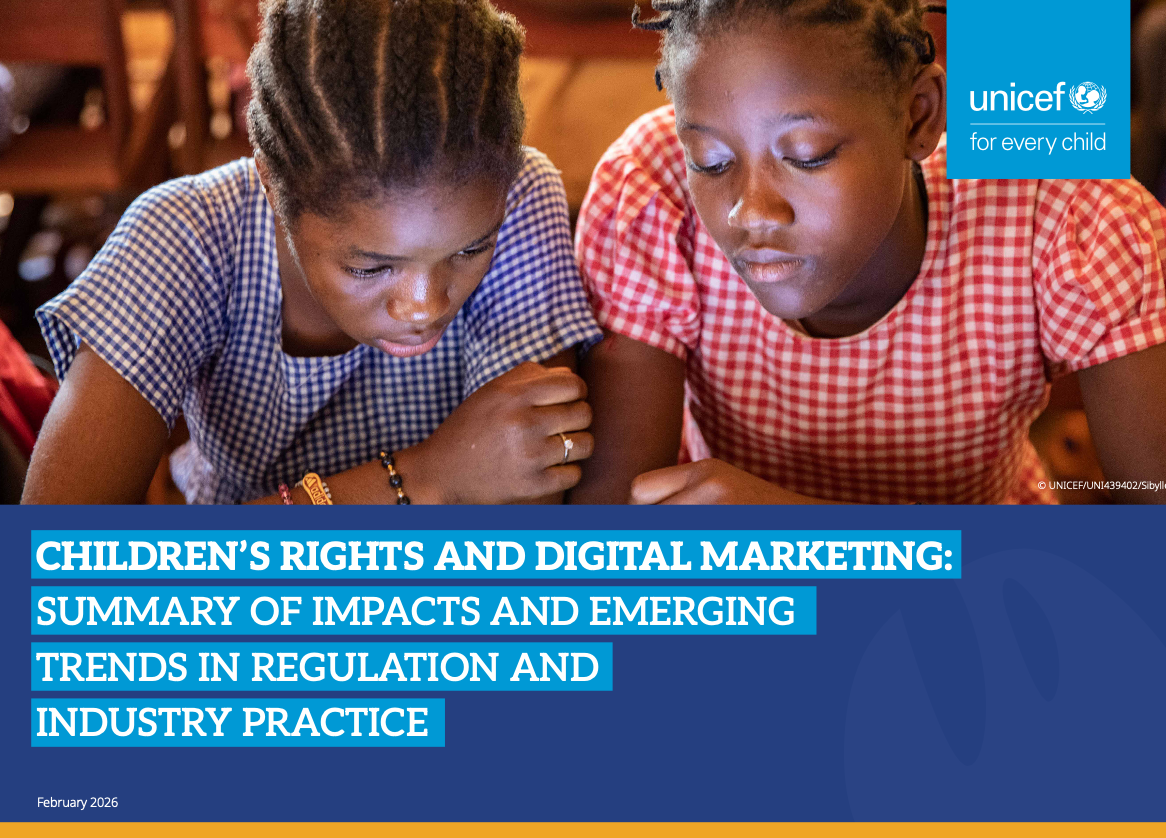
UNICEF has launched the second edition of its Industry Toolkit on Children’s Rights and Digital Marketing, setting a new global benchmark for how brands, agencies and platforms engage children in the digital economy.
The 2026 edition responds to growing regulatory pressure, investor scrutiny and public concern around the role of commercial digital content in children’s lives. As influencer marketing, AI-driven advertising and the creator economy continue to scale rapidly, expectations around safeguarding and responsible marketing are shifting.
Pepper Director and Co-Founder Beckii Flint joined a panel of international experts for the official launch webinar, alongside:
- Rupen Desai, Co-Founder of The Shed 28
- Alex Galt, Digital Ethics Leader at Inter IKEA Group
- Maria Mello, Coordinator of the Child and Consumer Program at the Alana Institute
- Alex Murray, Head of Advocacy at the Conscious Advertising Network
The session was led by Josianna Galea Baron, Child Rights and Business Specialist at UNICEF, and Ida Margarita Hyllested, Senior Adviser on Child Rights and Business at UNICEF.
The discussion focused on a critical question for the industry: how can digital marketing evolve to better protect children’s rights, without ignoring the reality that children are already part of the digital economy?
Why Children’s Rights in Digital Marketing Matter Now
The creator economy is projected to be worth €135 billion in Europe by 2032. It is global, borderless and algorithmically driven. However, while traditional media industries such as film and television have structured child safeguarding frameworks, digital marketing has grown without consistent global standards.
Children today are involved in commercial digital content in multiple ways:
- As recipients of advertising
- As featured participants in branded content
- As child influencers or content creators
- As background participants in monetised family channels
At the same time, AI-enabled targeting, immersive formats and behavioural advertising introduce new risks relating to privacy, transparency, financial governance and emotional manipulation.
The UNICEF toolkit directly addresses this evolving landscape.
What the UNICEF Industry Toolkit Covers
The toolkit provides a structured, operational framework for businesses across the digital marketing ecosystem. It is built around five core stages of child rights due diligence:
- Setting policy commitments
- Identifying and assessing impacts
- Addressing risks and harms
- Monitoring and reporting
- Handling complaints and remediation
Importantly, it identifies three key pathways to harm in digital marketing:
- Content: the messaging and substance of advertising
- Context: where and when children encounter marketing
- Design: how marketing is structured, delivered and targeted
For brands and agencies, this marks a move away from broad ethical statements and towards procedural accountability.
What This Means for Brands and Agencies
For marketing teams, agencies and influencer specialists, the toolkit signals a cultural shift.
1. Safeguarding Must Be Built Into Workflow
Responsible digital marketing cannot rely on assumptions. It requires:
- Clear influencer disclosure standards
- Age-appropriate placement and targeting
- Data protection due diligence
- Avoidance of manipulative design and dark patterns
- Documented safeguarding checks
Operational systems matter more than intention.
2. Financial Protections Are a Growing Risk Area
One of the most underdeveloped areas globally remains the financial protection of children featured in monetised online content.
While countries such as France and US states like Illinois have begun implementing reforms, there is no consistent global framework ensuring children retain and control earnings generated from commercial content.
As scrutiny increases, brands and agencies will need to demonstrate stronger financial governance in campaigns involving children.
3. Trust Is the Foundation of the Creator Economy
Influencer marketing functions because audiences trust creators. When children are involved, that trust becomes more fragile.
If audiences perceive exploitation, unsafe practices or profit being prioritised over child wellbeing, reputational damage extends beyond individual campaigns. It affects the credibility of the entire ecosystem.
Child rights are therefore not only an ethical imperative, they are central to long-term industry sustainability.
Pepper’s Contribution: The Responsible Kidfluence Code
During the webinar, Beckii Flint spoke about the development of the Responsible Kidfluence Code, created by Pepper as an open-source framework to support responsible commercial social media involving children.
The Code centres on four pillars:
- Mental and physical wellbeing
- Financial wellbeing
- Privacy
- Safety
It translates safeguarding principles into practical action for brands, agencies, parents and talent managers, embedding due diligence directly into commercial workflows.
The Responsible Kidfluence Code is cited within the UNICEF Industry Toolkit as an example of emerging good practice, reinforcing the importance of practitioner-led standards alongside global institutional guidance.
For Pepper, this recognition reflects years of building safeguarding into influencer marketing processes, not as an afterthought, but as part of responsible brand strategy.
Moving Beyond Headlines Towards Systems Change
Public debate in the UK and elsewhere has increasingly focused on banning or restricting children from social media platforms.
However, blanket bans are difficult to enforce and do not address the fact that children are already active participants in digital culture and commercial content.
The more sustainable solution, as reflected in the UNICEF toolkit, is systemic improvement:
- Shared language across brands, agencies and platforms
- Clearer accountability throughout the marketing value chain
- Transparent due diligence processes
- Proactive risk mitigation rather than reactive crisis management
The launch of the second edition signals that children’s rights in digital marketing are no longer peripheral issues. They are becoming embedded within responsible business conduct frameworks globally.
A Defining Moment for the Industry
The release of UNICEF’s Industry Toolkit on Children’s Rights and Digital Marketing marks a pivotal moment for brands and agencies operating in the creator economy.
As regulatory landscapes evolve and investor scrutiny increases, responsible digital marketing will move from being a competitive differentiator to a baseline expectation.
The question is no longer whether children are part of the digital economy. The question is whether the systems around them are designed to protect them.
Explore Our Latest Insights
Stay updated with our latest articles and resources.
.png)









Ready to elevate your marketing strategy?
Let’s add some spice to your next campaign 🌶️