
Why 2026 Is the Year of Social Search (and What Brands Must Do Next)
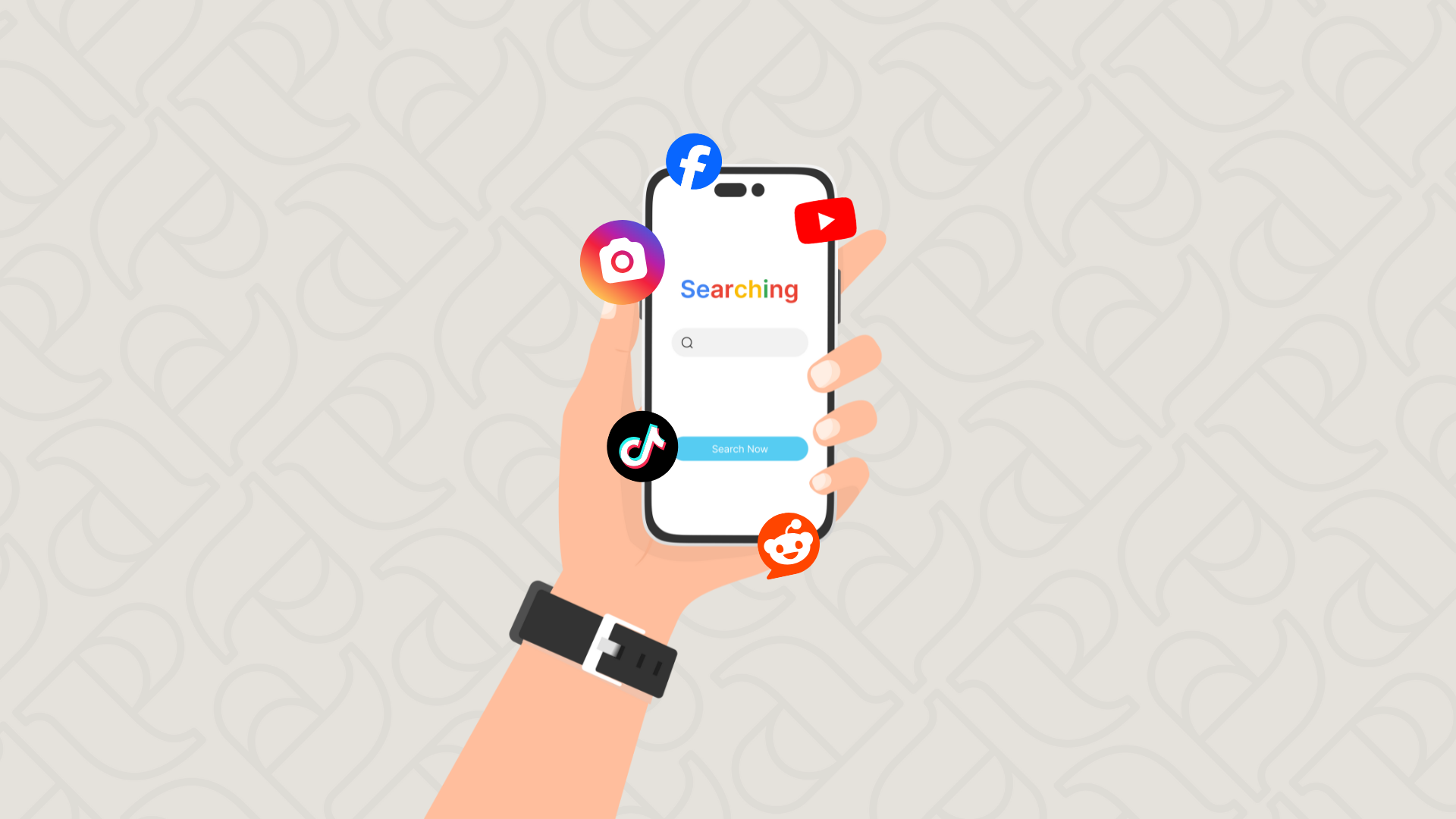
Social media has shifted from a place of passive scrolling to a powerful discovery ecosystem. The behaviour that once belonged to Google is becoming native to Instagram, TikTok and YouTube. Our 2026 Social Media Trends survey data reinforces this shift with absolute clarity. Audiences are now searching socially and brands must act fast to stay visible.
2026 is the year social search becomes central to brand visibility. The question is no longer whether consumers treat social platforms like search engines. The question is whether brands are prepared for the new rules of discoverability.
Consumers now search social platforms like they search Google
Our 2026 B2C Social Media Marketing Survey shows that 50.6 percent of consumers use social platforms like a search engine every day. This mirrors what the Social Media Trends Playbook has already highlighted. Younger audiences see platforms such as TikTok and Instagram as the quickest route to real recommendations, visual guidance and peer led insight.
When discovering new brands, consumers rank:
• Instagram at 50.6 percent
• TikTok at 42.9 percent
• YouTube at 42.9 percent
• Brand websites at 32.5 percent
• AI search engines at 15.6 percent
This proves that social discovery is not a niche behaviour. A product can now be found through a review, a reel, a haul video or a creator tutorial. The Playbook reinforces that social search is visual, emotional and deeply shaped by community signals. Users want practical demo based content, not static lists of links.
B2B marketers are treating social SEO as a strategic priority
The B2B survey shows the same trend from the business side. Marketers rate the importance of social search optimisation 7 out of 10, and 51.4 percent are already creating searchable formats such as tutorials, educational reels and how to content. In addition, 40 percent are investing in influencer collaborations for niche visibility and 40 percent are using keyword led captions.
This lines up with the Playbook’s view that social SEO is intent based content. Brands cannot rely solely on traditional website SEO. They must optimise where audiences are actually discovering products, which is increasingly inside social apps.
Why social search is growing faster than traditional search
Several forces are accelerating social first search behaviour. These are reinforced through both surveys and the Playbook.
1. People trust real people
The B2C survey shows that reviews, recommendations and customer content are the biggest drivers of discovery, with 54.5 percent favouring reviews and 41.6 percent relying on customer generated content.
2. Video led learning has overtaken text
Short form video is the most engaged format for 63.6 percent of consumers. When someone searches for tips, tutorials or comparisons, video led results immediately outperform static search listings.
3. Cultural speed is faster on social
The Playbook underlines that cultural cycles form and spread inside social platforms. Sounds, formats and trends influence what people search for and how they phrase it. Social search moves at cultural pace, while traditional search moves much slower.
The rise of natural language search across social
Across the Playbook and survey data, one theme keeps appearing. Users are searching in conversational language.
They type queries like:
• best moisturiser for dry skin
• simple pasta recipes
• clean girl makeup kit
• gifts for dog owners
• gym routine for beginners
This shift is why captions, alt text and on screen text have become strategic tools. In the B2B survey, 37.1 percent are optimising hashtags and metadata and 40 percent are using keyword led captions. The Playbook confirms this approach. Social SEO works best when content mirrors how real people think and speak.
What brands must do next
If 2026 is the year of social search, brands cannot depend on luck for discoverability. Below is a new section shaped around the guidance Pepper is giving clients right now.
The advice we are giving our clients for 2026
Develop a dedicated social SEO strategy
Treat social SEO as seriously as website SEO. It should not sit inside your organic content plan as a side activity. It needs its own goals, frameworks and measurement.
Identify your social keywords as you would in traditional SEO
Search behaviour on social is different, but the need for structured keyword research is the same. Identify phrases your audience actually uses in captions, comments and search boxes. Look at variations, misspellings and conversational phrasing.
Optimise content for search across formats
Every asset should be searchable. This includes:
• natural language captions
• on screen text with clear keywords
• product tutorials
• educational reels
• UGC that includes honest language
• alt text that mirrors user intent
Give organic strategy the same weight as paid and performance channels
This is a key shift. Many brands undervalue organic because it is not attached to direct ROI in the same way as paid social. However, as our surveys show, organic content delivers cultural relevance, discoverability and trust. These are the exact signals that power social search.
Prioritise creators who help you rank
Influencers help brands reach niche search queries. Micro and niche creators can help brands rank in specific search categories such as problem solving content, reviews or tutorials.
Build content for long term discoverability
Social SEO is not about chasing viral moments. It is about consistent, searchable content that is always relevant. Think evergreen formats that answer recurring questions.
The 2026 Social SEO Checklist
• Create tutorial, review and how to content
• Use natural language in captions
• Invest in influencers to reach niche searches
• Optimise metadata, alt text and on screen text
• Encourage and repurpose UGC
• Understand ranking signals for each platform
• Refresh content categories to stay culturally relevant
Social search is now part of the customer journey
Social search is no longer an emerging behaviour. It is a fundamental part of how people discover brands, validate decisions and engage with communities. Our survey data proves that audiences are already using social as a primary search tool and marketers are preparing for the shift.
Brands that invest in social SEO now will win visibility, build trust and convert more effectively across 2026 and beyond.
Explore Our Latest Insights
Stay updated with our latest articles and resources.

.png)




Ready to elevate your marketing strategy?
Let’s add some spice to your next campaign 🌶️